Published October 29, 2026 11:05AM
To Win the Backyard Ultra World Team Championship, Try Being … Vulnerable?
Down early and struggling, the Americans put aside their pride to pull off a stunning victory over Australia.

(Photo: Romain Mayambi)
How We Reported This
Author Dan England spoke with five members of Team USA after they won the 2026 Big’s Backyard Ultra World Team Championship on October 22. A rough start forced the team to abandon the fundamentals of competition and ask for help, be honest about their problems, and sacrifice for others. It paid off: the U.S. came from behind to defeat Australia and Belgium, who took second and third, respectively.
Early into the second night of the 2026 Big’s Backyard Ultra World Team Championship, Mark Dowdle turned to U.S. teammate Levi Yoder and admitted that he was so tired he might fall asleep and into the nearby ditch. Yoder replied that he was so tired he was hallucinating and might wind up in that same ditch.
Before the start, Harvey Lewis, a two-time individual backyard ultra world champion whom many on the U.S. squad thought of as their de facto captain, told his teammates to lean on one another. But Dowdle hesitated the first day, and so, he thought, did many others. It made sense: Backyard ultras are usually individual events predicated on you staying strong while others give up.
For the uninitiated, backyard ultra rules are pretty simple: Run a 4.167-mile loop on the hour, every hour, until only one remains. (That runner must complete one final loop, also called a yard, to be declared the winner.) At the Backyard Ultra World Team Championship, which alternates every other year with the individual championship, each participating country simultaneously hosts its own backyard ultra with 15 runners. The team with the most cumulative laps wins.
ADVERTISEMENT
Typically at backyard ultras, competitors are wolves looking for the elk with a limp. No one wants to look weak. No one demonstrated this formidable exterior better than Dowdle in the Last Soul Ultra this April, when his gamesmanship created the event’s most talked-about moment. But his competitive side was ubiquitous among the 15 elite backyard runners on Team USA. They each won backyard ultras to qualify; they were wolves, not elk.
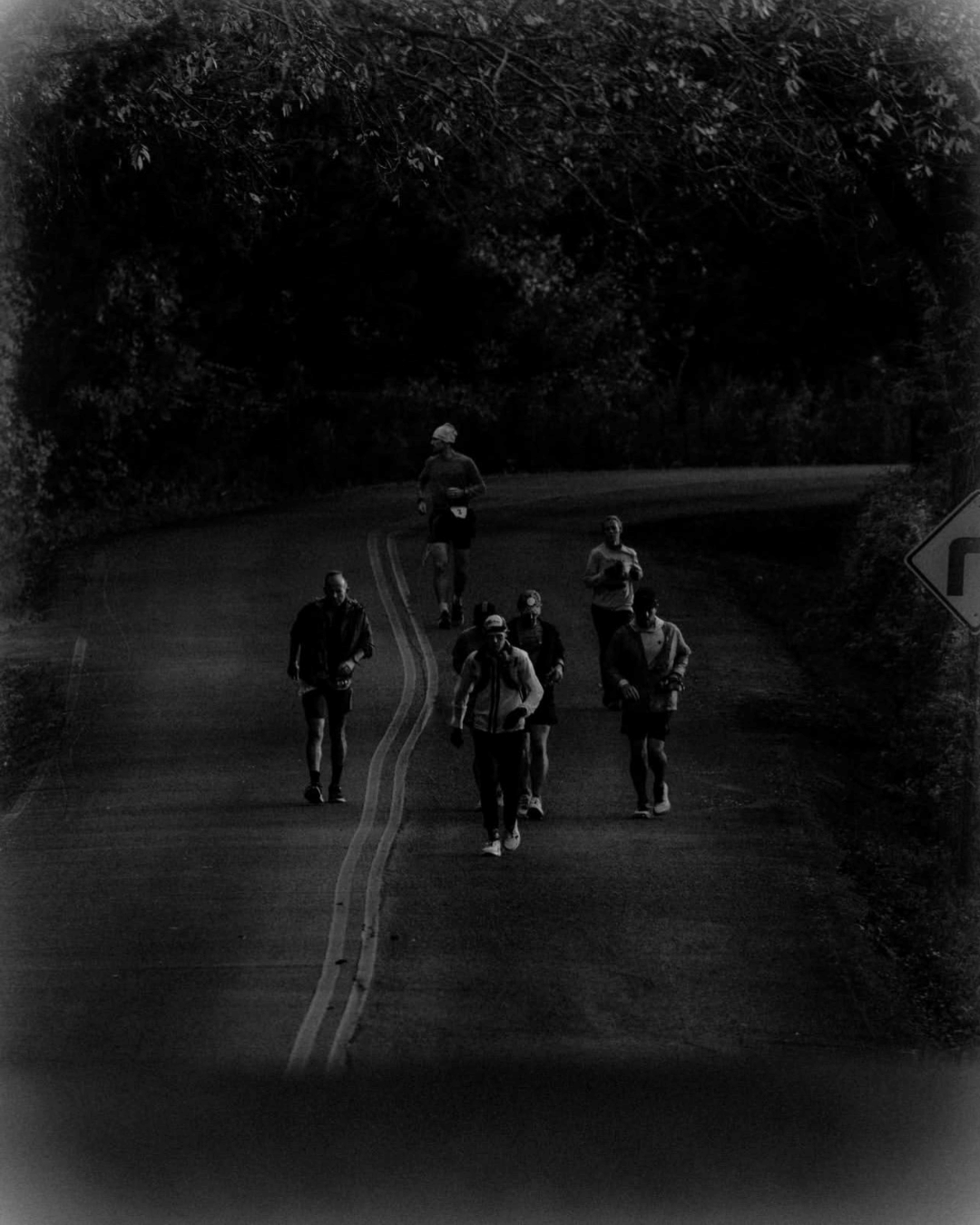
Yet Team USA struggled from the start. With daytime temperatures in the 70s Fahrenheit, it felt warmer than they thought it would. The course was hilly, with over 400 feet of climbing per loop, costing them a minute or two per loop in a format where extra seconds are precious. Indeed, over the first 40 laps when all runners from all 67 countries were still in the race, the U.S. had the slowest average lap speed of 52:21—nearly seven minutes slower than the fastest country, Slovakia.
Struggling through that second night, the U.S. decided to try a different tactic. They decided to be vulnerable.
Lewis urged the team to be honest about how they were feeling because there was a good chance others could help. It took Dowdle a bit to believe, even after watching how others supported each other.
ADVERTISEMENT
“It did take encouragement from my team to even be more of a teammate,” Dowdle told Trail Runner.
But Dowdle was enthused when, after his admission that he was struggling, Yoder suggested that they look out for each other over the next 3 miles they had to complete to keep going. Dowdle got the message: This would be a different backyard than he’d ever run before. They talked to each other through the loop and by the end they had caught up to their teammates.
“That turned the corner for me,” Dowdle said. “In a normal race, I would never say that I was falling asleep to another runner. You just would never give up that information. But that opened the door for me to be more vocal about how I was doing.”
ADVERTISEMENT
Several other members of the U.S. squad admitted that being honest with each other and asking for help when they needed it was key to them winning the world title. Instead of acting like individuals in a last-man-standing race, they were a unit. That helped many of them run farther than they ever had before—eight Americans ran over 80 yards, or 333.3 miles—when it looked like Australia might literally run away with victory.
“When some were feeling strong, we would help those who were not feeling OK,” said Megan Smyth, who set a PR with 82 yards and was the last woman standing. “I’m pretty sure that’s how so many of us got over 80 yards.”
Putting the “Team” in Team
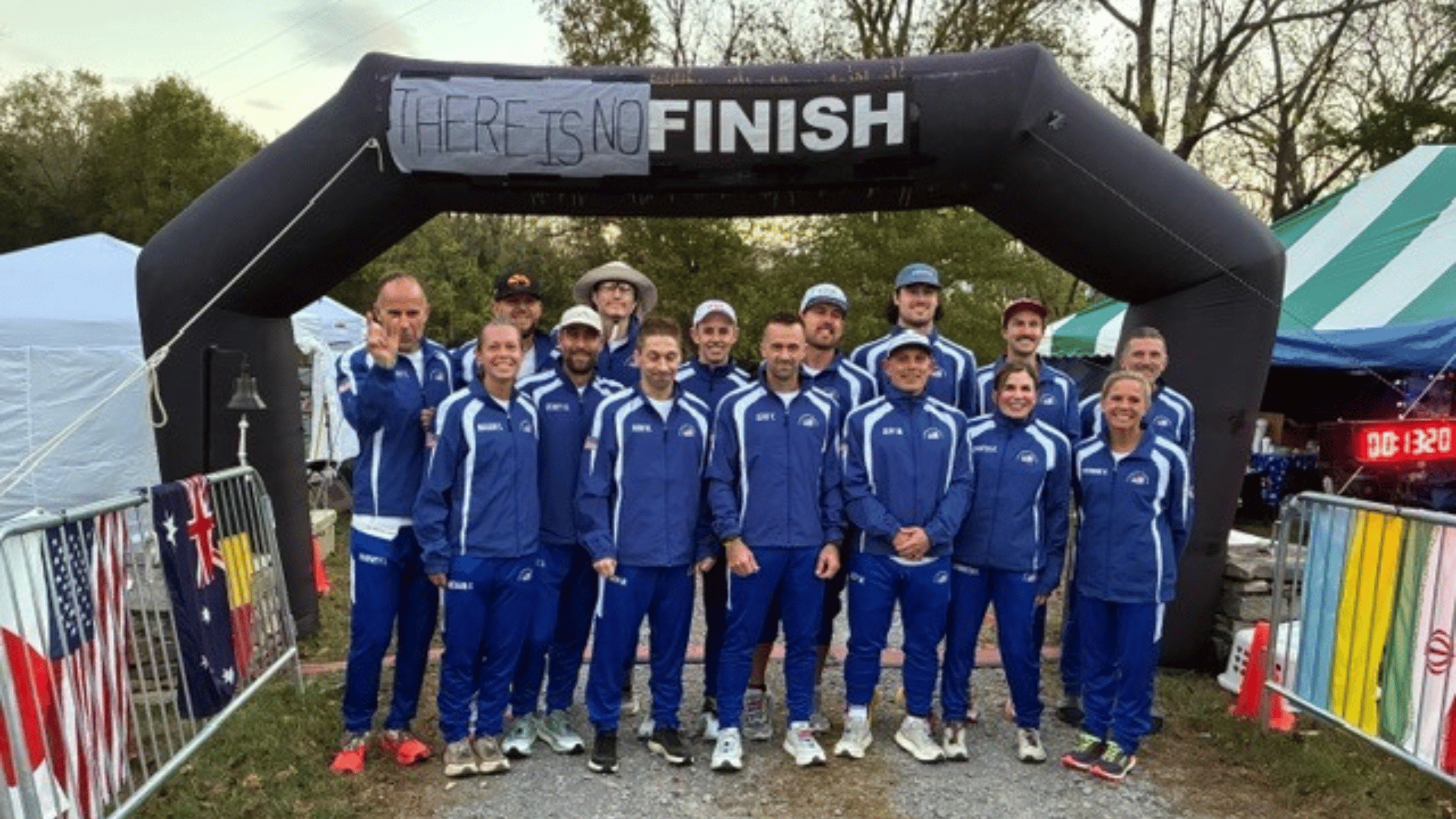
The backyard, despite its do-or-die nature, lends itself to camaraderie because of the way runners all start the next 4.167-mile loop together on the hour, every hour. Jon Noll qualified for Team USA by running over 440 miles at the individual world championship last year. Even there most competitors congratulated each other after each lap. “The ultra community, in general, is not exactly a cutthroat environment for the most part,” Noll said. He especially felt that sense of camaraderie this time as the miles piled up.
This is why Smyth loves the backyard format.
ADVERTISEMENT
“There’s no incentive to win a lap, so you really do wind up cheering for each other,” Smyth said.
Still, Team USA had to get comfortable with each other in a hurry. Even with seven returning members from the third-place 2024 team it was a little awkward at first: Some had previously competed against each other, and some called each other friends. Some were rivals. Other first-timers felt a sense of awe: Smyth had imposter syndrome, which doesn’t make it easy to talk about, say, a sore ankle.
But she also welcomed the unique race set up. If a typical backyard ultra can feel crowded and chaotic, the team race with its 15 competitors feels sparse, even intimate. Smyth got her wish right away.
“I haven’t gotten to do true team running since my cross-country days,” she said. “It was just a magical experience.”
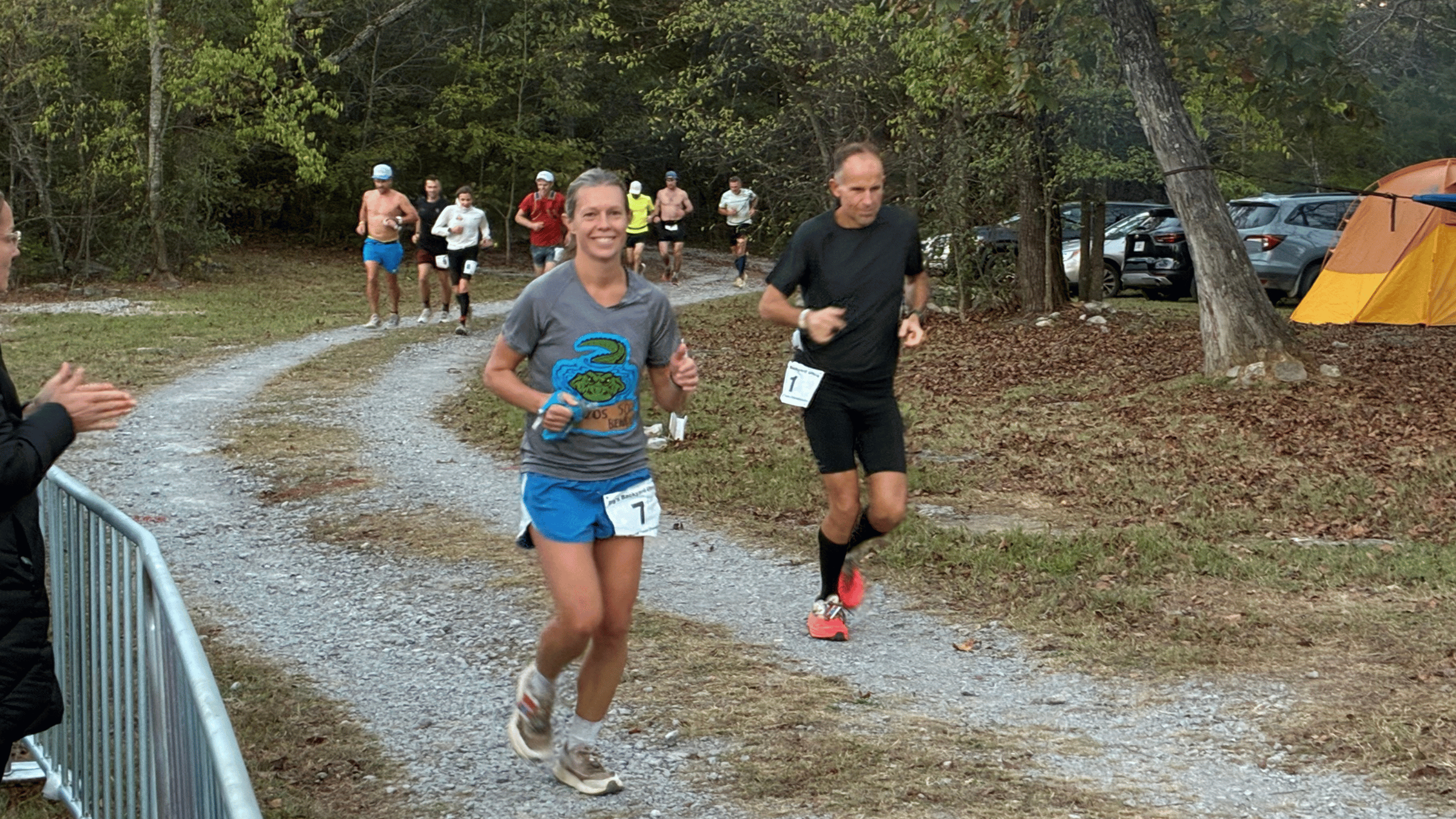
A couple team meetings over Zoom, as well as an in-person meeting before the race, helped shoo away some of the awkwardness, Lewis thought. But Smyth said Lewis helped bring the team together during the event, too, with little (even corny) things like running in a fighter jet formation and chanting “U.S.A!” for a lap.
ADVERTISEMENT
Smyth remembers walking at night and nearly falling asleep before the Ron Express came up behind her. Ron Wireman, competing in his second team championship, struggled early in the race and needed help from others. That first night, he was eager to pay his teammates back and named himself after a train to help them through the dark.
“He said, ‘MEGAN ARE YOU AWAKE?,’” Smyth said.
Smyth, just like Dowdle, learned how to ask for help. Later in the race, as the prospect of doing another lap on the steep trail, she requested a “hill sherpa.”
ADVERTISEMENT
A Trail and a Road Diverged
The team cohesion would be tested right away as Lewis insisted they answer a question democratically: Should they run the road or the trail?
Team USA competes on the original Big’s Backyard Ultra course in mastermind Gary “Lazarus Lake” Cantrell’s literal backyard in Bell Buckle, Tennessee. On odd years during the individual championship, racers run a trail loop during the day and a road loop at night. This time it was runners’ choice throughout the race.
The road was flatter and easier, but the hard, smooth surface can be problematic for trail runners. Smyth, for instance, said she didn’t bring many pairs of road shoes. But Laz recently made “improvements” to the trail loop that made it steeper, tougher, and slower. The precious minutes saved on the road loop could be the difference between having time to recover, fuel, sleep, and even go to the bathroom, and to DNF.
ADVERTISEMENT
“There isn’t a lot of wiggle room in a backyard,” Lewis said.
Communication was key as the team tried to accommodate runners struggling with the trail by adding more laps on the road.
“We were changing things as the race went on,” Noll said. “Sometimes you didn’t know what course you were doing [on the next lap]. Mentally that can be hard.”
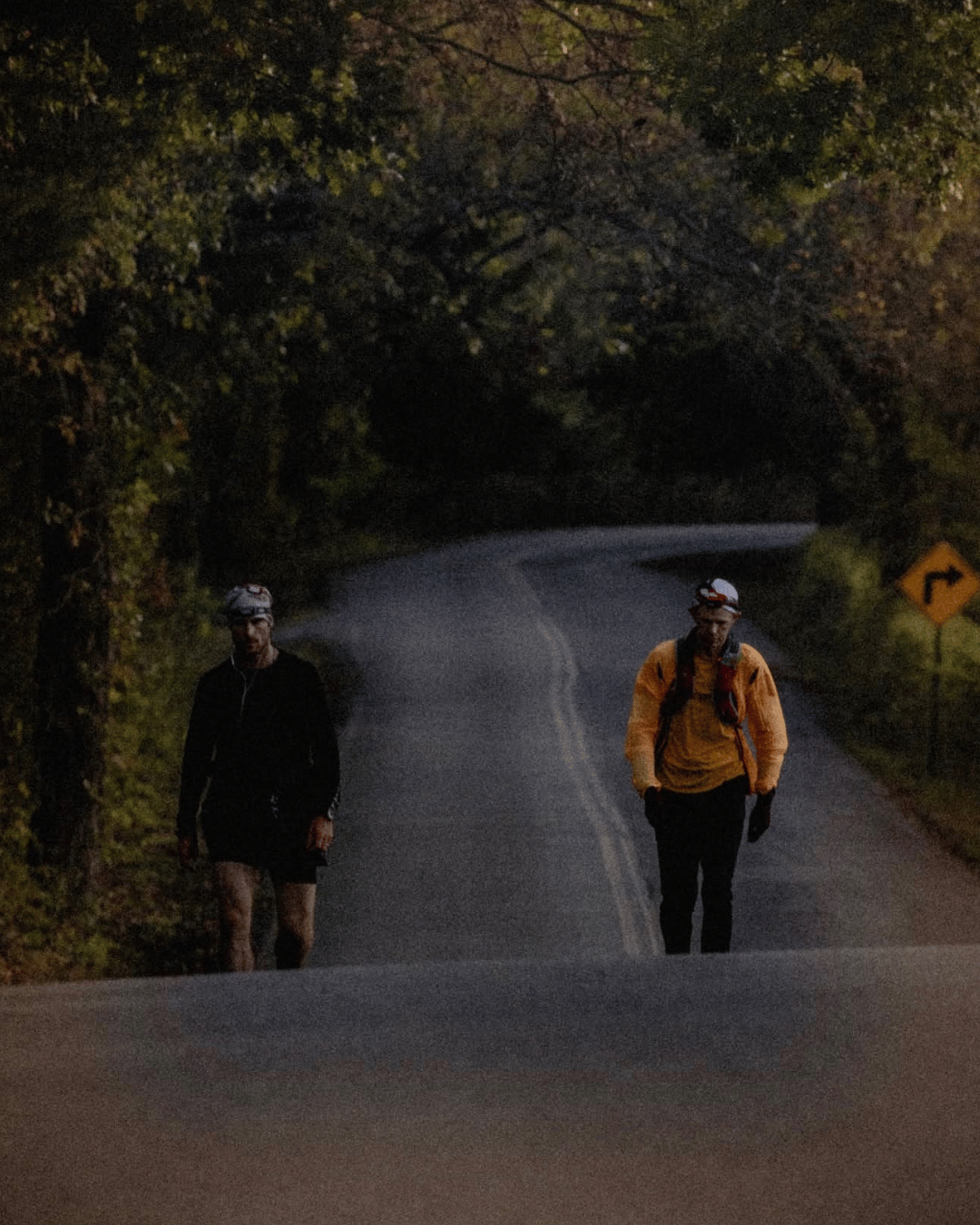
Ultimately, the back and forth paid off. Eventually emphasizing the road over the trail helped the team squeeze yards from people who may not have been able to continue otherwise.
“If we hadn’t moved to the road, I don’t know if we would have won the race,” Lewis said.
ADVERTISEMENT
It Ain’t Over ’Til It’s Over
As the third day burned off its final few hours, Australia had a commanding lead of 58 yards over the U.S. The Aussies still had 11 runners in the race; the U.S. was down to 9. Nicholas Steel kept announcing to his U.S. teammates just how far behind they were. More than one American admitted later that they found these updates annoying. Dowdle told himself he didn’t care and tried to enjoy the experience.
ADVERTISEMENT
But backyard veterans will tell you that the race doesn’t end at hour 70; that’s really when it starts. One Aussie dropped at yard 70, another at 72, two at 73, and two more at 75. By yard 80, nine Aussies had dropped. They had only two runners left—a precarious place to be, given the final runner can only complete one additional lap after the penultimate runner drops. Sure enough, Australia was out by yard 88. We’re not being judgy about this: They were on their third day of running without sleep. But that brutal attrition gave the U.S. a shot.
Suddenly Steel’s updates were inspiring. They would need Dowdle and Noll, the workhorses, to keep doing their magic. But the Americans realized that they could win if they got at least half their runners to yard 75 and several past yard 80.
“The possibility that we could catch up lit a fire under my belly,” Dowdle said, “and I remember thinking, ‘Oh, maybe I do care.’”
Even the Americans who dropped relatively early decided to stay at the campsite to cheer. This was big: Dowdle finished one lap with 15 seconds to go, riding the wave of exhortation to get him across the line in time.
ADVERTISEMENT
Lewis did what he could to keep as many runners out there as possible. He ran with those who were close to dropping, even to his detriment. At times he finished the lap with less than three minutes to go. Lewis, famously, sleeps for a few minutes after every loop, but running with others meant he wasn’t able to do that. Ultimately, he went out for yard 84 but didn’t finish it, a result that Lewis found disappointing.
“I didn’t have my own rhythm because I was helping others,” Lewis said. “My ultimate goal was to be there for the team, so I sacrificed myself and my own best race for that.”
That kind of support from teammates, along with the competitive boost the Americans got chasing down Australia, helped push some to their backyard ultra PRs. Nick Petterson made it to 84 yards, 19 more than his previous best. That’s nearly a full day more of running.
“The team needed you, and that was a really easy thing to grab onto,” Petterson said. “We needed everyone to crank up the numbers. That motivation outside of just myself was really helpful.”
Petterson thrives off that external focus anyway. During backyards, he enjoys asking others how they’re doing, even though it’s not always reciprocated.
ADVERTISEMENT
“The team factor was a major driver when times got hard for me,” he said. “I might have gone out earlier if it wasn’t for that.”
Yoder made it 86 yards, 11 more than his qualifying mark. Ryan Snickles went 69 yards after qualifying with 55. Smyth set a PR by five yards and quit only after her ankle swelled like a balloon. Jeff Walker got 75 yards, 30 more than his qualifier. Even Steel seemed inspired by his own updates. He went 94 yards—177% of his 53-yard qualifier.
Ultimately the U.S. won by a landslide with 1,120 yards to Australia’s 1,069.
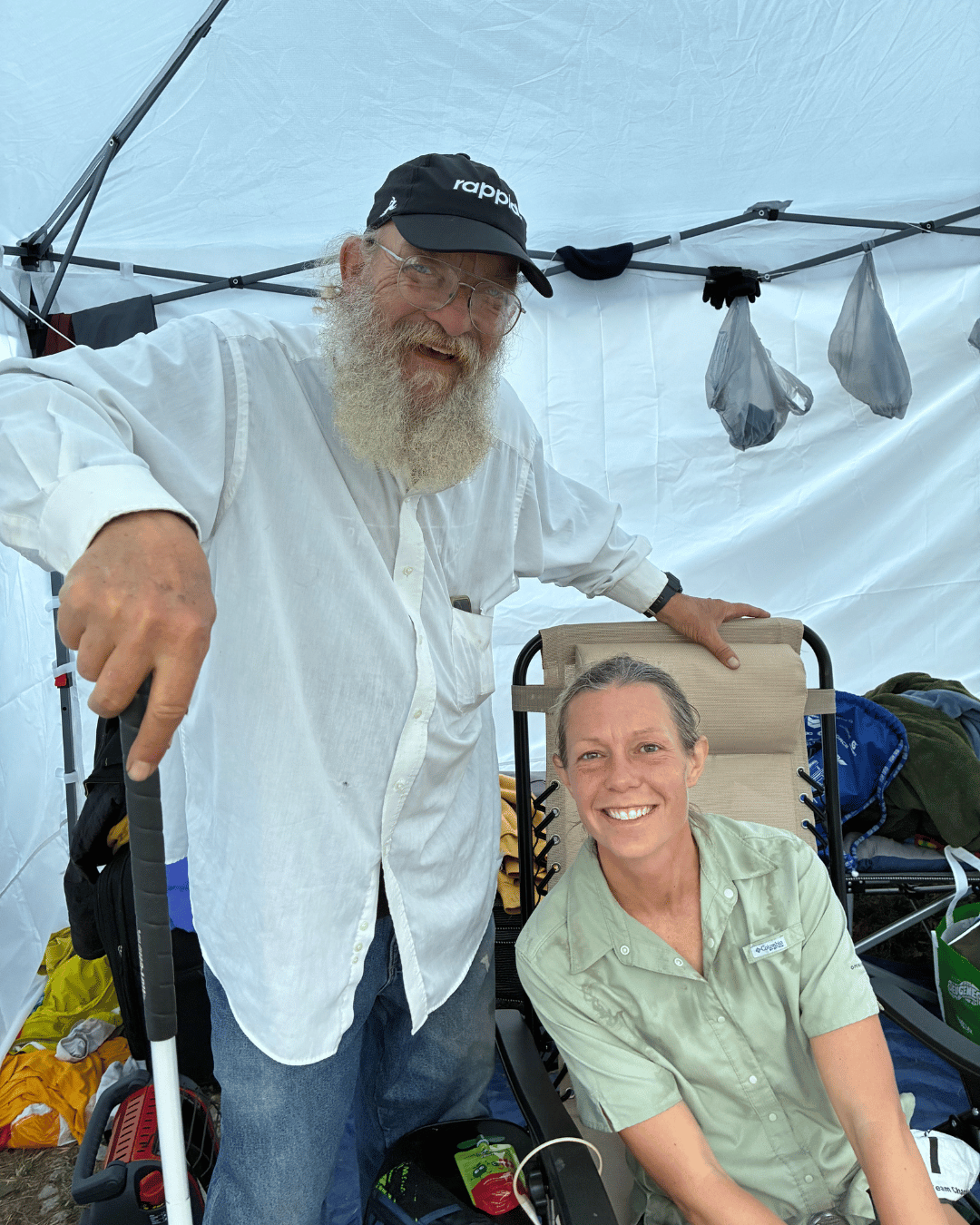
It’s the second world title for Team USA in this rapidly developing sub-sport. When the U.S. won in 2022, it was with only 860 yards. Belgium, which has won the other two team titles, took third this year—although two of their runners set the individual backyard ultra world record of 124 yards, or 516.7 miles over five days of running.
“When other runners are hanging on longer,” Lewis said, “it impacts everyone to hang on longer.”
ADVERTISEMENT
Ultimately, Dowdle was the last American standing with 107 yards—a personal best by 13 yards, or 54 miles. Noll got the assist with 106 yards. Despite his initial reticence, Dowdle says he values moments with his teammates more than his individual national title.
“There was one lap where I broke down crying,” Dowdle said, “and Nick Petterson saw me and put his arm around me and was just with me during that time.”
Dowdle wouldn’t want the backyard format to be flooded with team events, but he wants to go back:
“I’m bummed that you have to wait two years for it again.”